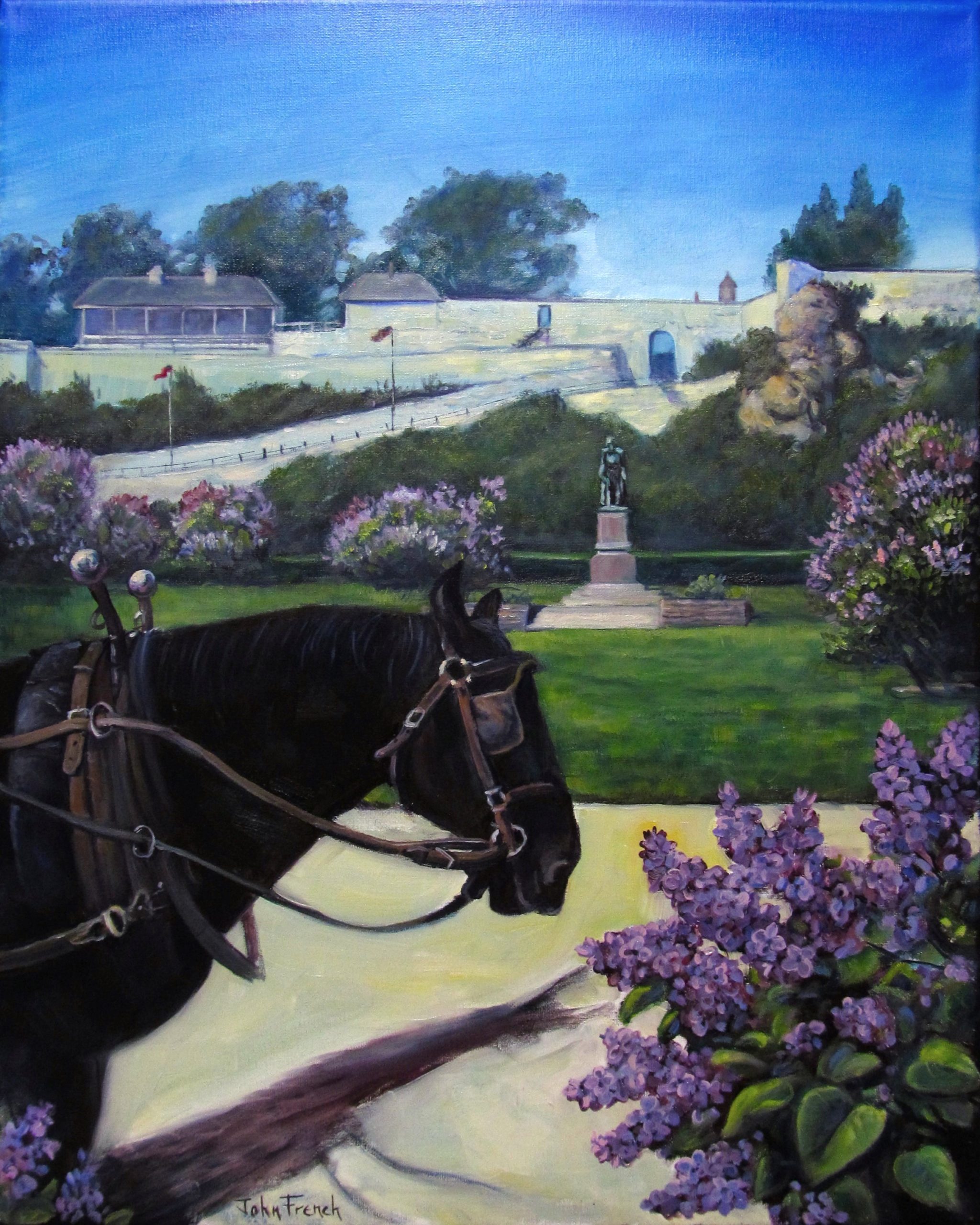
I’m absolutely thrilled to tell you that my painting made the Top 20!!
So what does that mean?
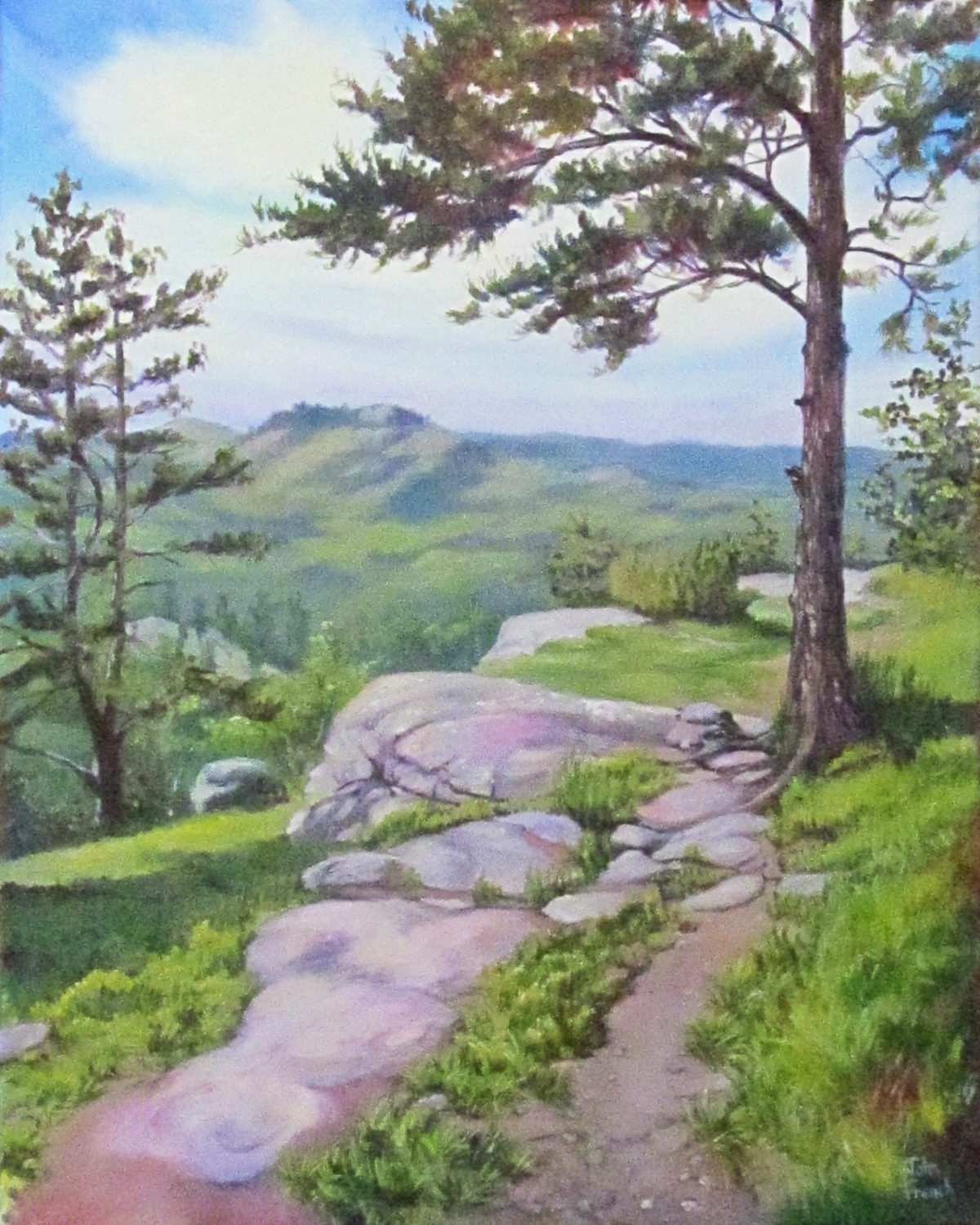
“Lilacs at the Fort” 16×20 oil on canvas
This contest is put on by Mackinac Island Tourism as a part of the 75th Annual Mackinac Island Lilac Festival , starting on June 9th, 2023. The Top 20 entries were selected by a juror, Dr Philip Rice, program Director for Mackinac Arts Council.
The Top 20 finalists will be on display at the Island during the Lilac Festival, where they’ll be seen by thousands of people.
That’s not all…
The Mackinac Island Poster Committee, made up of Mackinac Island business and gallery owners, will select a winner from the Top 20.
There will also be a People’s Choice prize, here the public votes for their favorite entry.
Plus, finalists are awarded complimentary ferry tickets to the Island so they can attend the reception on June 9th. There, the winning poster will be announced.
So, I’m going to Mackinac Island!
I feel like I’ve already won magnificent prizes; a chance to be seen by Gallery Owners, an opportunity to be on display at one of the Midwest’s hottest tourist spots, and a free ferry ride to a most magical place.
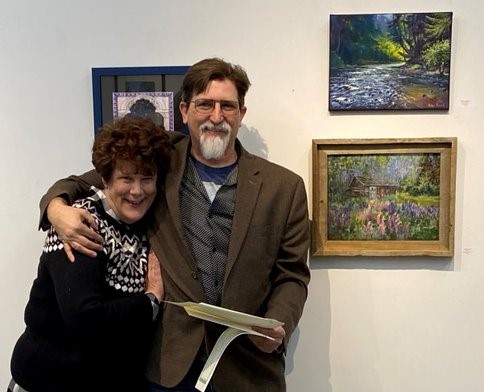
The 2023 Lake Superior Art Association Members Show reception and awards ceremony was held on March 9th. This event was well attended by artists and art lovers alike.
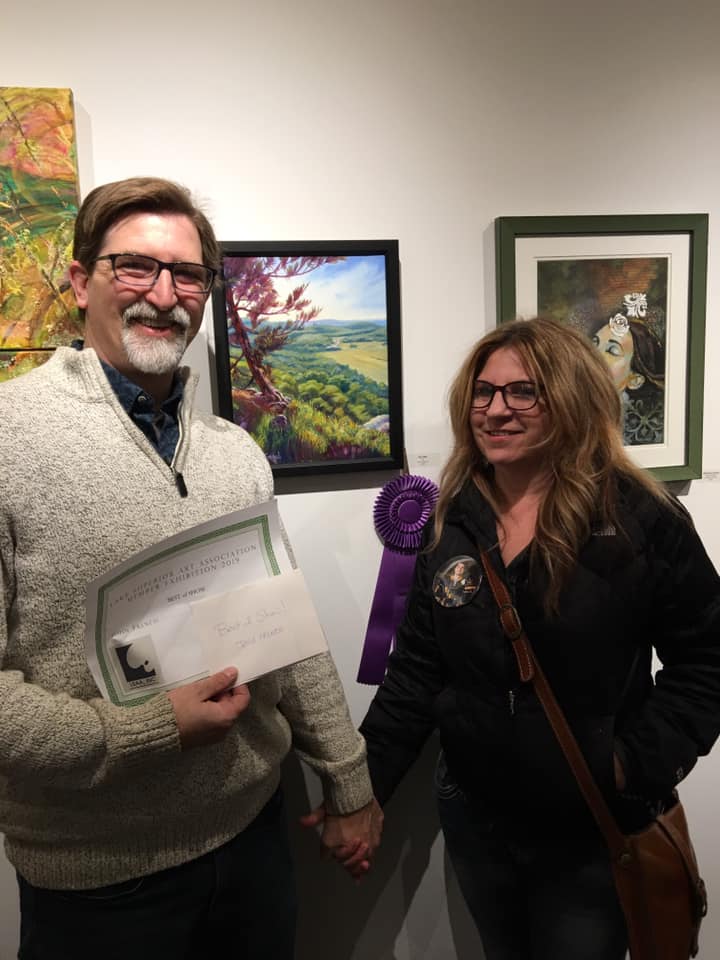
Here I am with LSAA Vice President Renee Michaud at the Members Show.
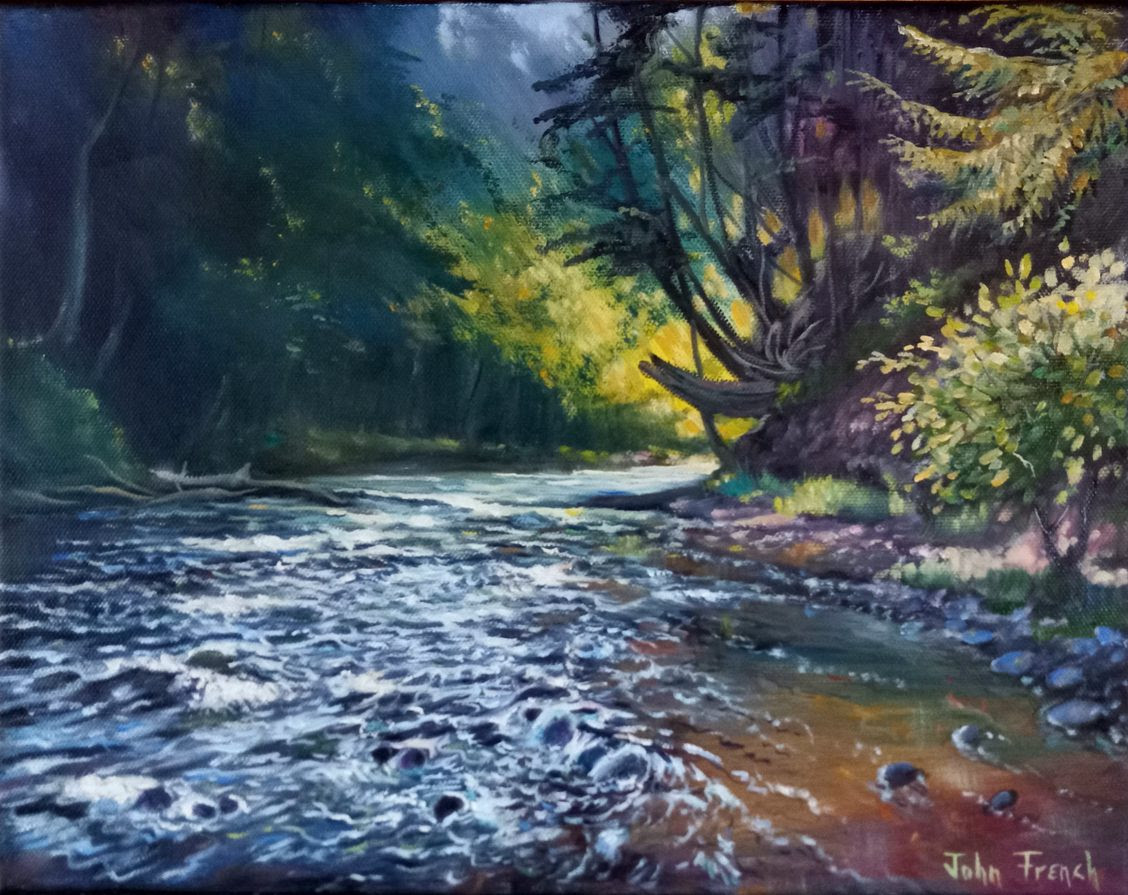
“Bend in the Gorge” 11×14 oil on canvas
Art is subjective. There are some absolutely amazing pieces in this show. I was a juror once, and I know how difficult it can be to choose the “best”. I want to congratulate everyone who participated, and of course the other prize winners.
Best of Show: “Lady in Gold” Fiber, by Judy Parlato
2nd Place: “Sampras Raven” Mixed Media, by Taryn Okesson
The last time I posted an entry here was in the summer of 2022, just before Art on the Rocks.
I have been busy.
I guess it’s time I catch up!
Art on the Mountain in 2021 was a smaller scale replacement for Art on the Rocks, which was cancelled due to some lingering COVID concerns. The crowd was steady, made up of mostly locals. I sold a few smaller pieces, and one large painting to a gorgeous family of outdoorsies. I also met one of my Instagram buddies, Jenna, who lives in the Harbor Springs Area.
For those who may not know, Harbor Springs is in Michigan’s Lower Peninsula. I live in the Upper Peninsula. Jenna gave me the names of a couple of galleries. So I contacted them. I got through to Hanni Gallery, and we agreed to work together.
In February of 2022, I drove down to Harbor Springs and delivered a handful of paintings. A few months later, they began to sell! I’m now a Michigan-selling artist!
I spent the first part of 2022 painting, stocking the galleries I work with, and restocking those galleries. I was also frantically getting ready for the return of the Art on the Rocks, the Upper Peninsula’s most prestigious art fair. This time, it was happening!
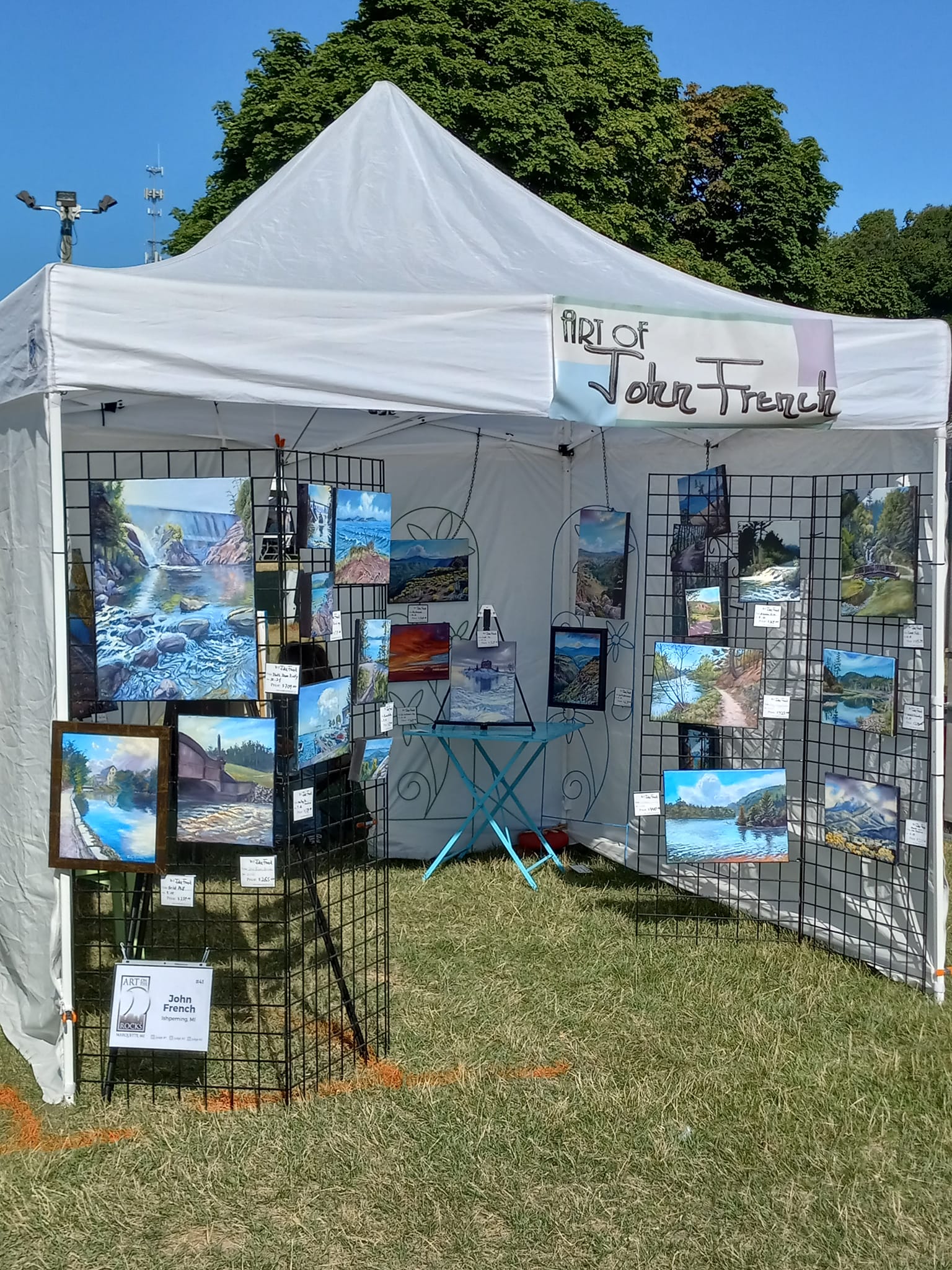
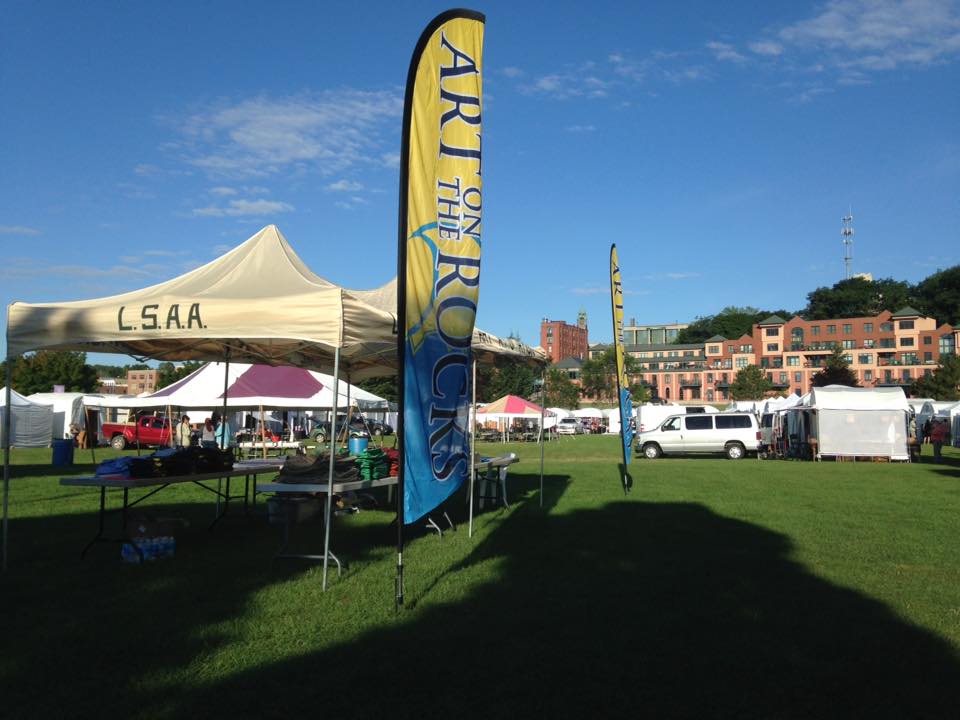
The 63rd Annual Art on the Rocks Art Fair took place at the end of July in Marquette. This event is organized and sponsored by the Lake Superior Art Association.The community was very welcoming! They came out and supported the arts like long lost family members! It was my best Art on the Rocks to date. My tent broke, so I needed another one. I’m buying a beautiful domed, professional quality art fair canopy from my friend Renee Michaud. I can’t wait to set it up and display my art at the 2023 Art on the Rocks!
Speaking of the Lake Superior Art Association, they have a new website!
The LSAA put out a call asking for help updating their website. I know a bit about WordPress, so I volunteered. The update ended up being a total rebuild. You see, the LSAA lost their access to their old site. So they needed a completely new website.
I’m no webmaster; I just know how to do stuff. But three months later, after lots of back and forth, hours of meetings, and tons of edits, we launched the new https://lakesuperiorartassociation.org/
Please check it out! I think it turned out pretty nice!
I also started working with The Noquemenon Trail Network (https://noquetrails.org/ ) on a project to honor their donors. This is thanks to my friend Madeline Goodman, who put me in touch with the Trail people. Maddie has been great at supporting and promoting local arts!
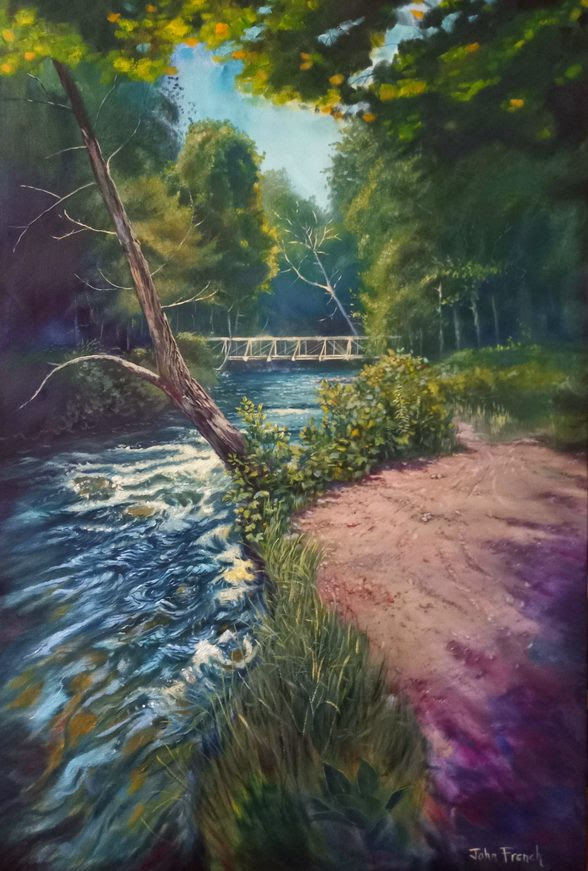
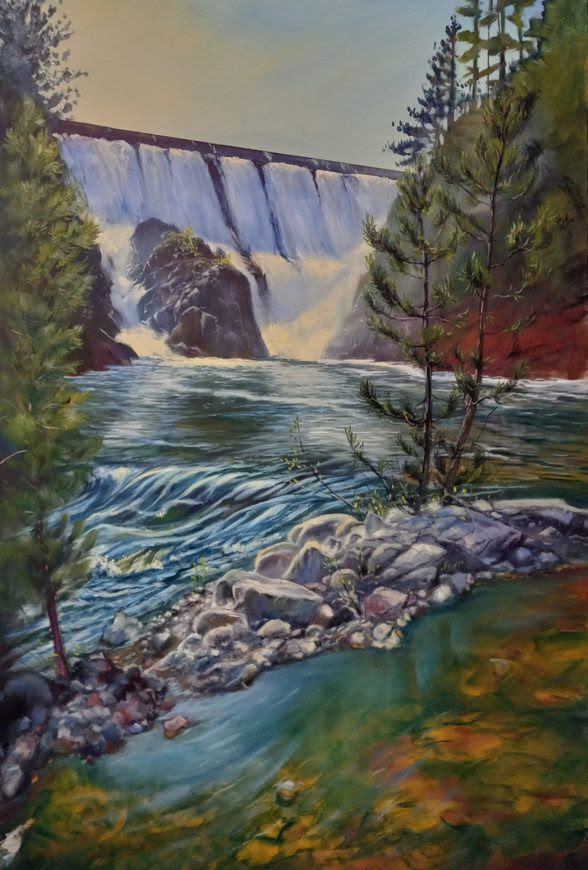
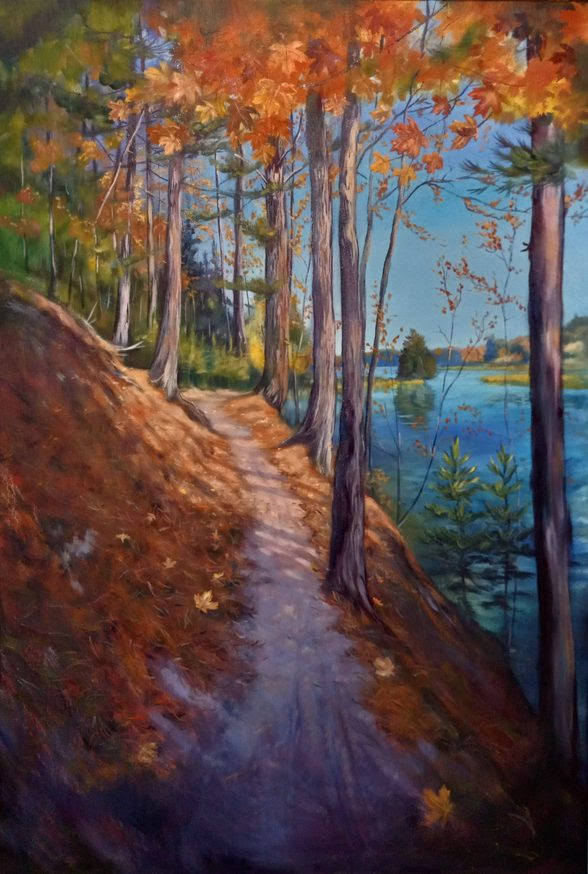
The Noquemenon folks are planning a large art installation to put up in their chalet. The installation will consist of four large paintings, each representing a different season, at a different part of their trail system, along with So far, I have three of the four done: Summer at the Gorge-ous trail; Spring at the Forestville Dam, and Autumn on the Dead River. The winter scene is in my studio now!
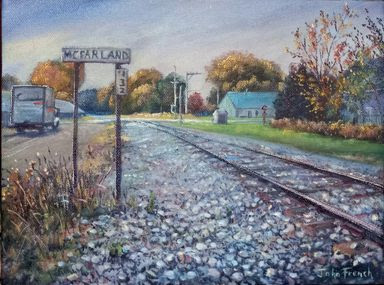
In September, I contacted a gallery in the Madison, WI area about representation. I’m thrilled to tell you that my work can be seen at Farwell Gallery in McFarland, Wisconsin! Soon after my first shipment arrived at Farwell, one of my paintings sold! Then another! And a third! I now consider myself a Midwest Regional Selling artist!
Remember, I accept commissions!
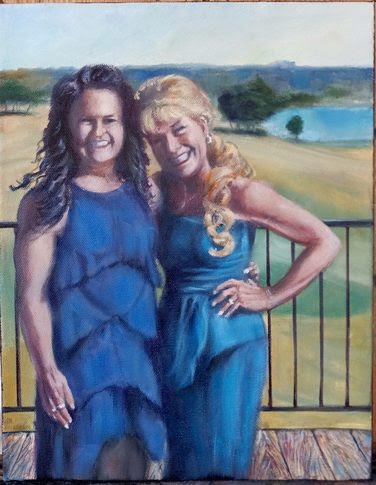
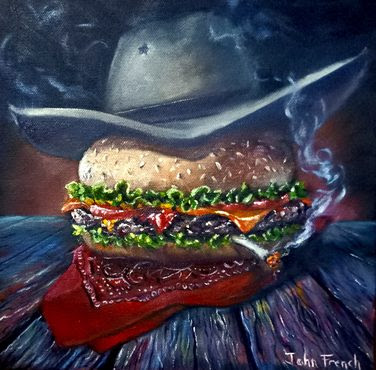
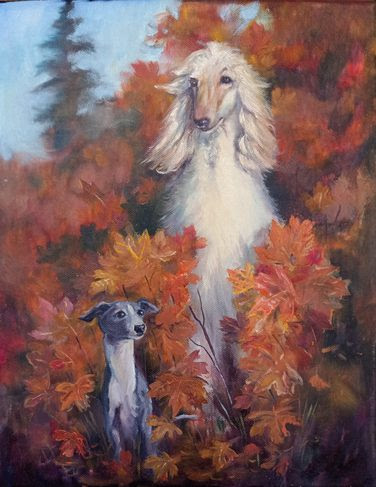
I can often accept custom commissions throughout the year. Here are a few that I did in 2022: a memory of a sister, a badass burger, and two very different hounds.
2023 is off to a good start already. I’ve sold a few pieces, and I’ve got a future large commission lined up for the summer! More on that as it develops. I’ll try to keep up with this blog, and update it more often. If you want, you can follow me on Instagram. I post most frequently there. Find me at https://www.instagram.com/artofjohnfrench/
I’m looking forward to being back to this historic event, now in it’s 63nd year!
The event was started in 1959 by a small group of artists, It’s grown to be one of the premier art fairs in the upper Midwest.
New Art of John French paintings Available!
I’ve been quite busy getting fresh new work ready for you to enjoy. I have original art available for every budget, from this 18×24 piece down to several smaller works.
Dam Pretty View
This 11″x14″ painting of some northern Michigan hills and a stream beautifully captures the wild and rugged area near Michigan’s Huron Mountains.
Scroll down to see more new paintings, available beginning on Saturday, July 30th at Art on the Rocks!
Imagine taking a walk in the wooded hills in Northern Michigan, or the high desert gorges in New Mexico, or even among the concrete and glass mountains of Chicago. You round a corner, or crest a hill, and you gasp at the view before you. What do you do? You pause, and take in the scene. You snap a picture. You inhale the view and exhale some stress.
And, if you’re like me, you create a painting!
“How long did it take?” “How do you get your inspiration?” Where is this?” “Is this a real place?”
People ask me questions like this quite often about my landscape paintings.These are great questions! These folks are truly interested in the work, and in many cases, about the process. People want to know what it takes to get my art from my busy brain to the finished painting on display before them.
There is a lot that goes into a single painting, often before the brushwork and color mixing even starts.
My landscape paintings usually start with movement, and getting outside. That movement could be a walk, a ride in the car, or sometimes even an airplane ride. Wherever I go, I’m always looking around.
If something catches my eye, I take a picture. I take tons of pictures. This part is so much easier than it used to be! With such a nice camera on my cell phone, I can take as many pictures as I want, and see them immediately. If I don’t like the photo, I delete it.
I also observe, and take mental notes, My photos are for reference only; they serve to jog my memory. Nothing beats observation, memory, and creative imagination. Often, when I look at a scene, I imagine what brush I’d use, and what colors I would mix. I guess in my head, I’m always painting.
I thought it would be fun to follow my process on a single painting.
The painting is called “Faltering Giant” This is a scene from the coast near Lake Superior. There is a sandy path called the Songbird Trail that winds along a creek, through tall red pines, to Lake Superior and back. The trees reach to the sky like columns from some ancient temple. They flank the trail like giants, quietly watching as they have for decades.
This scene caught my eye as a nearly fallen pine made a diagonal line, interrupting the vertical stripes made by the surrounding trees.
I took a photo, made some metal notes, and finished the walk.
Back to the art studio
Sometimes a scene is in my heart and mind, constantly nagging me to put it on canvas. It occupies my thoughts. I’m obsessed with it. I plan my color scheme,and I already know what brushes I’ll use. These are the easy ones to create. These paintings flow from the tubes and onto the canvas with little effort.
Other times, I’ll want and need to paint, but I won’t have a particular scene in mind. I’ll go through my pictures, trying to decide which to do next. I don’t have a shortage of material! The hardest part is not finding something to paint, but deciding which of my snapshots to paint next.
This scene was the former; it kept popping into my mind. I couldn’t wait to start on it.
I thought this should be a larger piece, regal and grand, like the tall red pines are in real life. So I chose an 18×24 inch canvas, which is bigger than what I usually paint on.
Let the Painting Begin!
I started out by toning the canvas.
Some artists tone their canvases with thinned paint before they start the creative part of the piece. Lately, artists are starting to understand the dangers of long term exposure to paint thinners, and they will scrub in the tone with a stiff brush. Others chose to do this step in acrylics.
Some neutralize the white canvas with a gray wash or scrub. Others “warm up” the canvas with an umber wash. I’ve seen some artists tone the canvas with red, allowing some of these bits of warm and bright show through the final piece.
I generally choose to tone my canvas with masses of color that more or less match the hues of the final painting. This provides a good color foundation and compositional framework as I develop the scene.
My next step is to start adding the darks.
At this point, I start working in some darks. I sketch in some major elements and define shapes. This further strengthens the composition.
I usually mix up a real dark purple, or a dark green. I rarely use black out of the tube, though lately I’ve started experimenting with ivory black on some paintings.
The choice of dark color depends on how I think the final painting should look. Sometimes, the dark will vary from one area of the same piece to another.
A Dance of Light and Shadow
From here on out, the painting will be a push-pull dance between lights and darks, with each layer offsetting and enhancing the one before.
So at this point, I start bringing out some light. Using my photo reference, memory, and imagination, I decide where the sunlight may be touching, and where it isn’t.
Then I follow with more darks as needed, then more lights, on and on until the scene feels right.
This painting could be done now. The scene is well laid out, the tone is set, the compositional framework is built and finished.
Details Define
“Faltered Giant” 18×24 for $700
The finishing touches are important to me. The details define the scene. This is what makes me feel like I’m there again. I render the bark on the trees, add in some thin branches and twigs, and illuminate the whole thing with some final highlights.
When the painting says what I want it to say, I stop and sign my name.
For me, there’s more to this than a straightforward work of art. I see a mighty being that has faltered, almost fallen. Yet it’s being held up by the giants around him.
Hence the title “Faltered Giants”
This means a lot to me. People falter, and sometimes it’s up to the rest of us in society to help keep someone from falling. Sometimes, we need to prop each other up.
This painting is available at Wintergreen Hill Gallery, 810 North Third Street, Marquette, Michigan.
Now, let’s see why people may wish to buy landscape paintings.
I recently asked my collectors why they bought landscape paintings, mine or any other artist. Here are some of their answers, some slightly edited for clarity, but straight from their hearts!
A moment, a place, a time…
“It’s not just a representative image. It’s the feeling the painting portrays. All the senses awakened and memories relived.” -Laura
“An everlasting memory of a special place” -Sheila
All of the paintings on this page have been sold. All of the paintings on this page have been sold.
I’ll daresay that most of the time, people buy art with their hearts. It makes them feel good.
When someone has experienced a place that positively connects to them emotionally, and then they see a skillfully composed, artistic rendition of that place, they will often simply fall in love with that art.
They’re not just buying the image they’re bringing home the emotion.
“A moment, a place, a time that I love or miss.” -Jenna
“Pleasant reminders of enjoying, walking, and viewing the Big Lake” -Amy
All of the paintings on this page have been sold.
Sometimes, it’s just a pretty painting!
All of the paintings on this page have been sold.
Very often, people buy a painting from me simply because it’s beautiful. I ask them “Do you know where this scene is?”
If they say no, I ask if they WANT to know. Sometimes they do, other times they don’t. Sometimes they just like how it looks.
Sometimes people will buy a scene because it reminds them of a completely separate place. I don’t correct them. It’s not that I’m being dishonest. I just don’t sever the emotional connection to the landscape paintings.
“Depth and richness of color” -CJ
“The details of the painting, how beautifully done by you” -Sharon
“It gives me a feeling of tranquility!” -Joan
Some of my best clients even told me specifically why they bought my paintings.
“I like your landscapes because they appear to be my memories or vision of what I see.” -Brian
“They are beautiful and bring peace and tranquility as I am absorbed into the scenery” -Kathie
When I paint a landscape, I do so with passion and spirit, and I think that energy often comes out of the canvas and connects with the viewer
“I like this one because the sky and the water show movement in three dimensions!” -Brian
In closing, there are a lot of reasons someone may buy art. Mainly, it connects to them on an emotional level.
Landscape art has the power to connect with the viewer emotionally, but on a much more personal level. Those of us who enjoy the outdoors, and love a nice view, feel an attachment to the world around us and the scenery before our eyes. A well done, well executed, well represented piece of fine art offers a charming option to preserve those memories, and keep them alive in a unique and spiritual way.
Thank you, to everyone who took the time tell me why they bought landscape paintings!
In short, because I love doing it, I’m good at it, and I have fans that love them.
How about figures, or portraits, or still lifes?
Since I was a little kid, I’ve drawn and painted figures. I enjoy painting figures. It was my favorite thing to do in college. I loved to place these figures in sword and sorcery scenes, so many times, they had fantastical landscapes as backgrounds. These fantasy-scapes were created from my observations of the real world. I didn’t pursue this course to the point of professional adequacy.
Later in my professional career, I painted a few portraits. I still do on occasion, but it’s not my favorite thing. I refuse to let a client take a portrait if they aren’t happy with it. That means I’ll spend hours and hours working a face until it’s right. It’s very time consuming.
I painted still lifes in school, and hated them. I find them boring and tight; they’re too claustrophobic to me. Which cleverly leads me to the main point…
I love big scenery!
I’m always in pursuit of a view. Since I was a young, I’ve been outside exploring my surroundings. I’ve waded through freezing streams, climbed mountains, chased a desert horizon, and jumped in icy-cold Lake Superior. It’s never been enough for me to look at a boulder without climbing the boulder. A new trail in the woods will entice me to just keep going, just to the next bend, just past the next curve.
Given my love of the scenery around me, it’s little wonder that I love to create landscape paintings. I get to express my awe of the world around me. I see beauty all over, and by putting it on canvas, perhaps I can get someone else to see the beauty.
I like to say that when I paint a landscape, it’s like exploring the place I’m recreating, and using my brushes and colors to tell you what I see.
I can’t take you on a climb up that mountain, but I can take your eye, your imagination, and your heart on a climb up that mountain.
Funny, related, side story:
Years ago I was visiting relatives in southern Illinois. This area is pretty flat, with miles of corn and soybean fields. One spot near my aunt and uncle’s house, called Junction, offers a view of these fields gently rising into tree covered hills. I went plein air painting on the side of the road near Junction. I showed the finished painting to my uncle. In his southern accent he said “Oh, that’s purty! Where is that?” I told him it was over by Junction. “Aw hell! I never knew Junction looked like that!”
I can show you the dazzling colors I saw splashed in a stand of trees at sunset.
I can lead your eye into the depths of Lake Superior, and over it’s choppy swells.
I can make you wonder what’s around that bend, or down that slope, or over that ridge.
I can invite you to sit quietly and enjoy the view.
Available Soon at Hanni Gallery, Harbor Springs, MI
Hopefully, I can move your spirit with a landscape painting, just as I was moved when I saw the landscape in life.
Many of my landscape paintings have paths or roads in them. This is very much on purpose. This is my way of inviting you into the scene so you can explore with me.
Please note: I am NOT an Art Historian. This is a summary of some quick research and observations of my own. Just to be clear, my research included reading actual books.
I love painting a landscape!
As you can probably tell by looking over this website, I specialize in creating works of art which depict a variety of scenery.
What makes a painting a Landscape painting?
A landscape in art is simply defined as an artistic representation of countryside or other scenery. Buildings can be included. Animals and figures can be present, but they’re not the primary focus of the painting.
When did Landscape Painting start as an art form?
Early in art history, paintings were usually created for educational or religious purposes; they told a story. The backgrounds of these paintings often had simple landscapes, just to set the scene. The landscapes were part of the story, but never the star of the show.
Ambrogio Bondone Giotto:
St Francis Receiving the Stigmata
-In early paintings, the landscapes were vague, simple, and stylized.
Over time the background scenery got more and more detailed and realistic. In the Renaissance period, in the 1400 and 1500’s, artists began experimenting with creating more depth in their work with the use of linear perspective and atmospheric perspective.
Linear perspective creates the illusion of depth by using receding lines. Think of a straight run of railroad tracks, with the tracks converging in the distance.
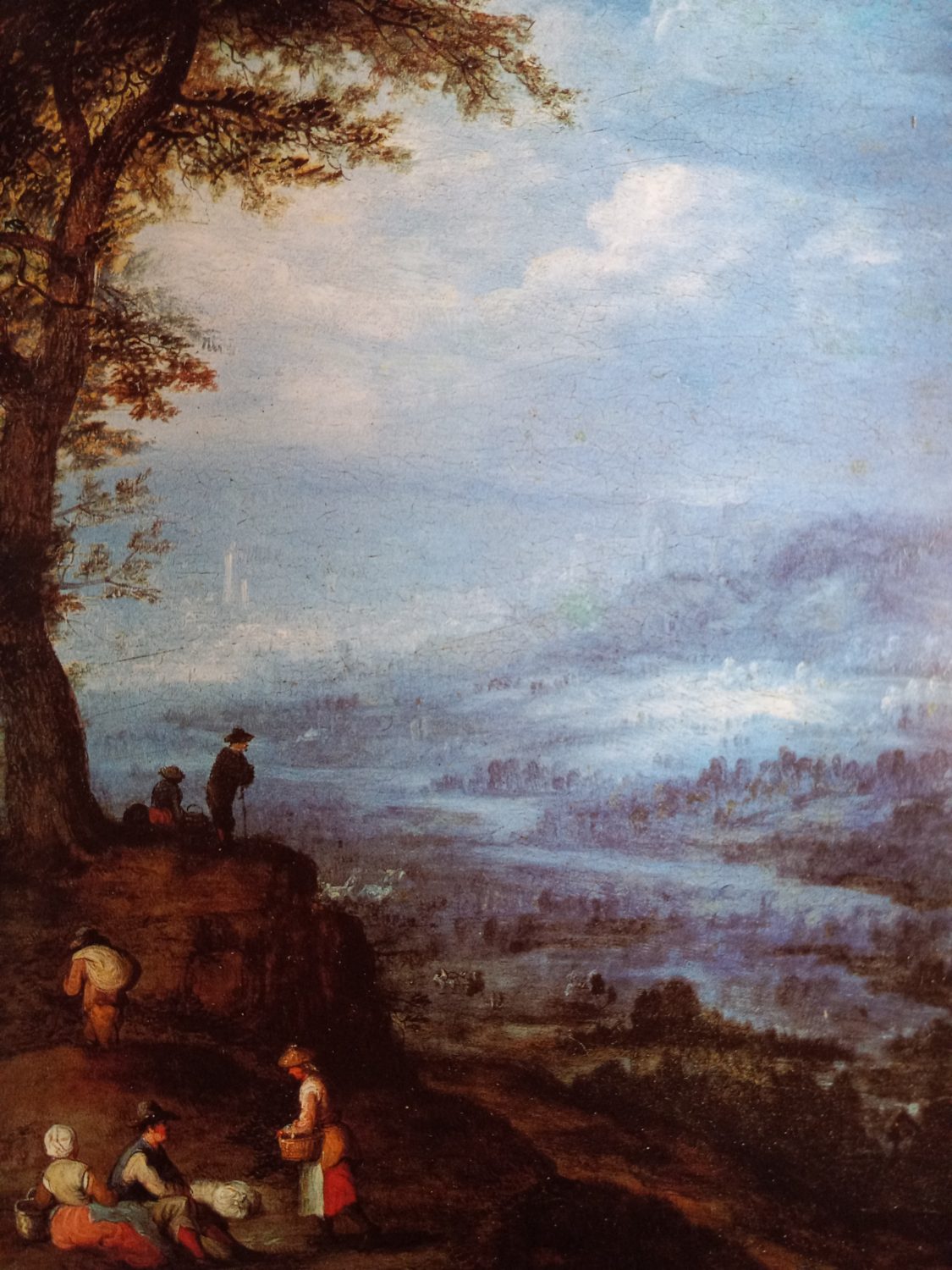
Atmospheric Perspective is a technique used to suggest depth in a flat work by making far away objects bluer and less defined than the objects which are closer.
Leonardo DaVinci:
Mona Lisa
-note the fairly detailed landscape in the background. Raphael:
The School of Athens
-Excellent example of linear perspective used to achieve a sense of depth. Jan Brueghel the Elder:
On the Way to Market (detail)
-This is a perfect example of atmospheric perspective.
The beautiful landscape in this painting is more profound and detailed, but still not the main subject.
Landscape comes into its own
In the 15th century, artists in The Netherlands began painting secular, non-religious landscapes. But the practice didn’t catch on elsewhere until the 17th century. In the 18th and 19th centuries, the practice of landscape painting became an acceptable and popular form of art.
The landscape painting, in the talented hands of varied artists, takes on many forms. Albert Bierstadt painted monumental, romanticized, and highly detailed pieces from the American west.
Impressionists like Claude Monet preferred to paint everyday life, therefore his landscapes were beautiful, serene, and straightforward depictions of the world he lived in.
Vincent Van Gogh painted subject matter similar to his contemporaries, but in a much more stylized presentation.
Albert Bierstadt
Among the Sierra Nevada Claude Monet:
Antibes Seen from La Salis Van Gogh:
Starry Night
Landscape painting in the world today.
While I don’t have precise numbers, looking through any online art directory, it seems that landscape artists make up a majority of painters, with thousands of individual styles and techniques. Landscape art has made its way into popular culture via Bob Ross and Thomas Kinkaid.
And who can forget the Ron Swanson quote from the TV show Parks and Rec : “It’s pointless for a human to paint scenes of nature when they can go outside and stand in it.”
Which begs the question: Why do I do it, and why do people like it?
In the past couple of years, I’ve decided to pursue excellence in my art.
I told you in part 1 how I decided that I needed to quit being good enough, and pursue excellece.
Once I recognized the need to improve myself and strive for excellence in my art, I needed to figure out what I was going to do to be the best I could be.
So what did I do to pursue my goals of creating better paintings?
I Explored
I looked at other artists. I checked out my local peers, some departed legends, and some internet sensations. I rediscovered Albert Bierstadt and Thomas Moran. I tried to paint the dramatic light and atmosphere like they did.
I discovered Renato Muccillo, who is self taught like I am, but way better. I went on YouTube and discovered Michael James Smith, a realistic painter who has some excellent videos! At the other end of the spectrum I found Scott Naismith and his semi-abstract landscapes.
Albert Bierstadt “Among the Sierra Nevada”John French “Clouds Falling into the Sandia Mountains”John French “Scattered Thunderstorms”
One of my favorites is a Spanish artist named Fermin Garcia Sevilla. I love the way he blends realism with a dash of smoky abstraction.
I Experimented
I wanted to paint realistically, but with a little abstract flare. So I painted a couple of more realistic pieces. I painted a couple of wild pieces. Then I painted some things in between. I figured out where I wanted to be on the realism scale.
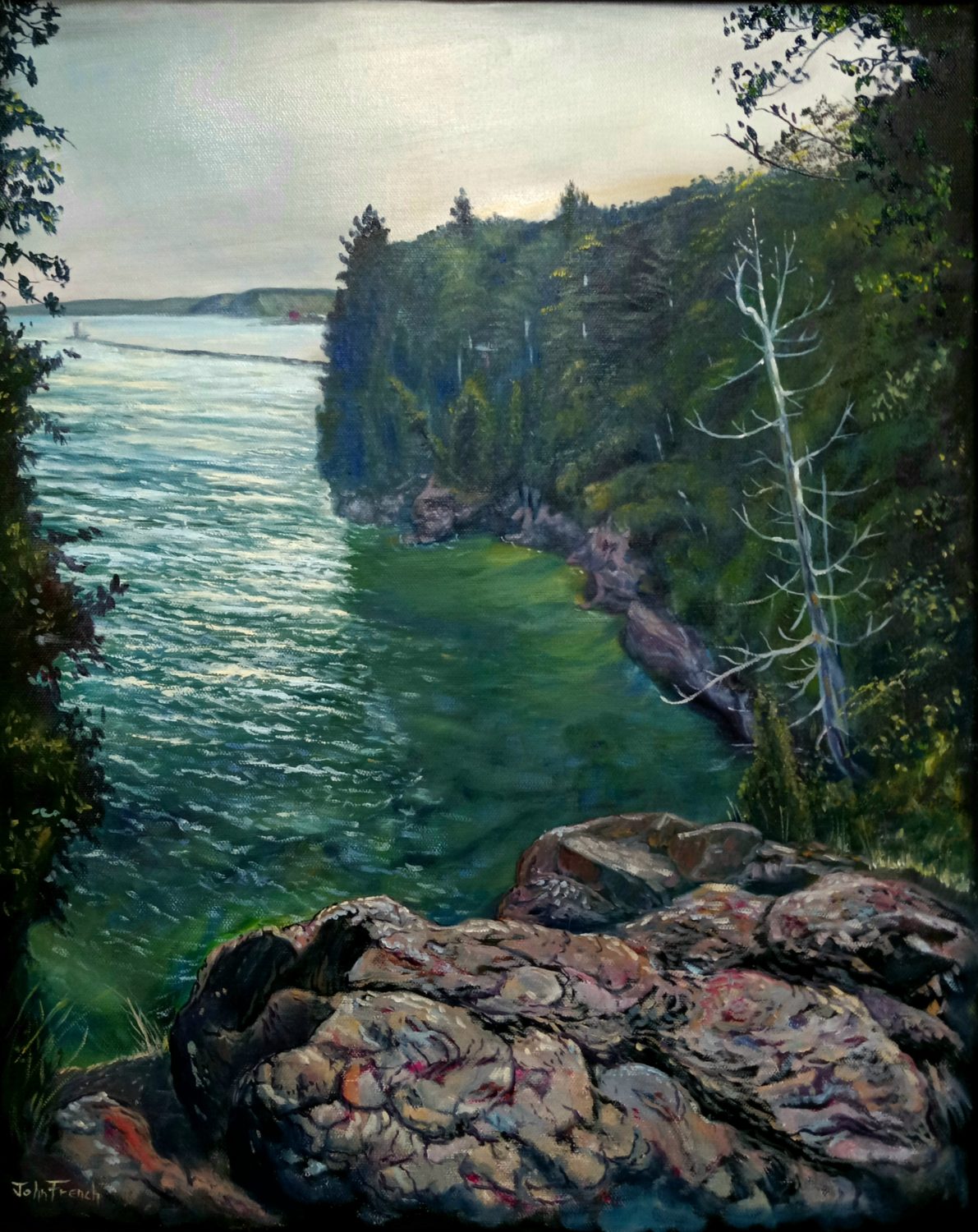
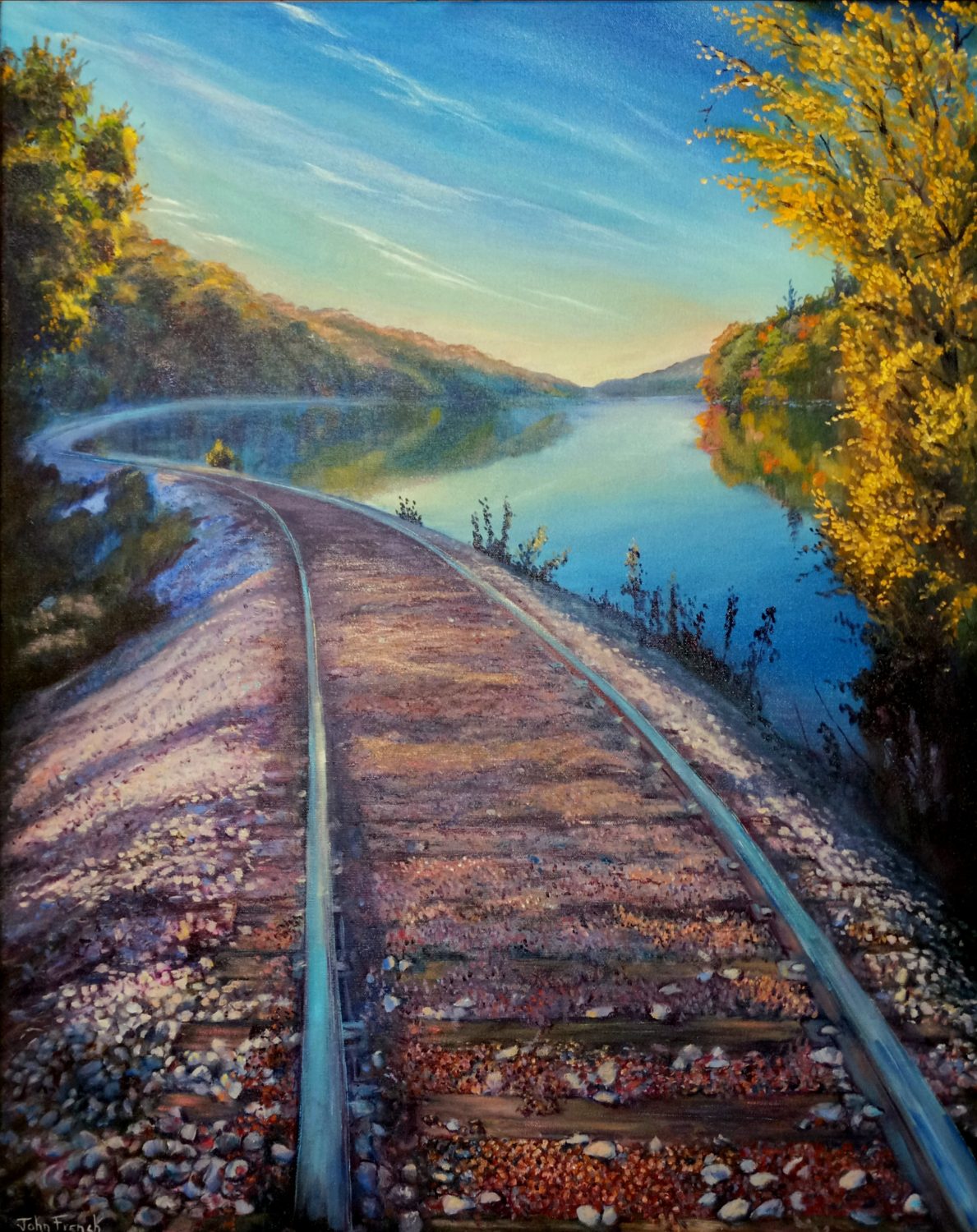
John French “Black Rocks Overlooking Lake Superior”John French “Quarry Moon”John French “Rail Runner”
I slowed down and took my time
Sold! “Pink Path”
I paid attention to detail. I painted the granite specks on boulders, and little pebbles on a trail, and individual blades of grass. I painted better waves and ripples in the waters. I painted the roughness of tree bark, and individual needles on a red pine. I focused on the little things that would make a better painting.
“Hiking Sugarloaf”
I tightened up my brush and knife work.
Painting in a loose fashion is fun and conveys energy, but I wanted to limit those wild strokes and create deliberate and purposeful elements in my compositions. I focused on painting with intentional brush strokes to convey proper form and shape. Every now and then, I’ll let a few crazies show up to keep the painting lively!
The Painting to the near right, ” Above Bandelier” is one of my favorites. There is depth, detail, and even some loose brush work in the sky.
I paid closer attention to lights and darks
No more dull, flat paintings. I wanted light! I wanted shadow! I wanted drama!
I wanted contrasting patterns and rhythm that would capture your eye and lead you into the painting. I created these elements by juxtaposing light areas and dark areas.
I got my colors right, then pushed them
I started working to match colors better. I started with a limited palette, mixing my paints so they closely represented what I was seeing. I especially practiced my greens, so they weren’t too intense.
Later, I played with new colors, like quinacridone magenta, thalo violet, and cyan.
The painting at the lower far right is more or less accurate color, but with some hot reds in the foreground, conveying heat!
“A Day in a Texas Park”
The Results are In!
My oil on canvas piece, “The View” marks the culmination of my process and progress. This small work perfectly represents my goals. It’s realistic, the depth is perfectly conveyed, the foreground tree is detailed, the lighting is dramatic, and when you look at the foreground, you see the bits of colorful abstraction, playfulness in an otherwise straightforward painting.
“The View” was awarded Best in Show at the 2019 Superior Art Association Members Show!
I’ll share more wonderful results of my pursuit of excellence in Part 3.
Note: I’m not yet a full time artist. I’ve been working towards that goal, but I have a full time career in manufacturing to help support my habit.
In the past couple of years, I’ve decided to pursue excellence in my art.
A few years ago, some of my coworkers and supervisors left the company I work for to help start a new, similar business. I knew them, they knew me. We’d worked together for years.
After several months, they were ready to hire someone with my qualifications. So I applied, and interviewed, and waited for that phone call.
The phone call came; they hired someone else. I was disappointed, but also relieved. After all, I have a good job. I know what I’m doing. Still, I had to wonder where I’d gone wrong.
The guy who they hired was also a coworker of mine. We had the same job title. In fact, we worked closely together on many projects. We basically did the same job. They chose him over me. Why?
Because he was excellent, I was not. He did excellent work, consistently, and on demand. I did excellent work sometimes, if things went right, and sometimes it took me a long time.
“Good Enough Syndrome”
After some reflection, I realized that I suffered from GES, or Good Enough Syndrome. I shouldn’t say that I “suffered”, because GES is self induced.
Sometimes, when I did a job, I got it done quickly, but not at the best quality I could have. Other times, I did the job very well, but it took longer than it should have because I wasn’t focused; I was sloppy.
GES has affected almost everything I do; my work, my home projects, and sometimes even my art!
Log Slide at Grand Sable Dunes. I like this painting, but I don’t love it. I know I could’ve done better!
An Artist Friend Gently Calls Me Out
I joined the online painting group “Let’s Paint New Mexico”. Every few weeks, a photo is sent out to group members and we use that photo as reference or inspiration for a painting. One photo was a mountain scene, with a winding road going through a New Mexico town. I thought my painting was good! I thought other paintings were excellent.
A fellow painter and friend suggested I sign up for an online boot camp style painting class. What?! Me? Why? I’m a good artist!
I was good, but I wasn’t excellent. I think my fellow painter friend recognized the potential for excellence in my work.
Not all of my paintings were just good enough. I did some excellent ones here and there. If they weren’t sometimes excellent, I wouldn’t have sold any. But I have a lot of mediocre “good enough” paintings in storage.
I decided at this time to make a very deliberate decision to pursue excellence in everything I did. No more “good enough” at work, no more “good enough” at home, and certainly no more “good enough” in my art.
I’m going to be excellent!
Welcome!
We use cookies on our website to give you the most relevant experience by remembering your preferences and repeat visits. By clicking “Accept”, you consent to the use of ALL the cookies.
This website uses cookies to improve your experience while you navigate through the website. Out of these, the cookies that are categorized as necessary are stored on your browser as they are essential for the working of basic functionalities of the website. We also use third-party cookies that help us analyze and understand how you use this website. These cookies will be stored in your browser only with your consent. You also have the option to opt-out of these cookies. But opting out of some of these cookies may affect your browsing experience.
Necessary cookies are absolutely essential for the website to function properly. These cookies ensure basic functionalities and security features of the website, anonymously.
Cookie
Duration
Description
cookielawinfo-checkbox-analytics
11 months
This cookie is set by GDPR Cookie Consent plugin. The cookie is used to store the user consent for the cookies in the category "Analytics".
cookielawinfo-checkbox-functional
11 months
The cookie is set by GDPR cookie consent to record the user consent for the cookies in the category "Functional".
cookielawinfo-checkbox-necessary
11 months
This cookie is set by GDPR Cookie Consent plugin. The cookies is used to store the user consent for the cookies in the category "Necessary".
cookielawinfo-checkbox-others
11 months
This cookie is set by GDPR Cookie Consent plugin. The cookie is used to store the user consent for the cookies in the category "Other.
cookielawinfo-checkbox-performance
11 months
This cookie is set by GDPR Cookie Consent plugin. The cookie is used to store the user consent for the cookies in the category "Performance".
viewed_cookie_policy
11 months
The cookie is set by the GDPR Cookie Consent plugin and is used to store whether or not user has consented to the use of cookies. It does not store any personal data.
Functional cookies help to perform certain functionalities like sharing the content of the website on social media platforms, collect feedbacks, and other third-party features.
Performance cookies are used to understand and analyze the key performance indexes of the website which helps in delivering a better user experience for the visitors.
Analytical cookies are used to understand how visitors interact with the website. These cookies help provide information on metrics the number of visitors, bounce rate, traffic source, etc.
Advertisement cookies are used to provide visitors with relevant ads and marketing campaigns. These cookies track visitors across websites and collect information to provide customized ads.